Joshua Oigara wants Stanbic in Kenya’s top three.
Joshua Oigara reached his first big career target early, becoming KCB chief executive at 37 after setting himself the goal of leading a blue-chip company before 40. Now running Stanbic Holdings and Standard Bank’s East Africa business, he has set another measurable ambition. He wants Stanbic to break into Kenya’s top three banks by 2027 or 2028, a target that will require converting rapid balance-sheet growth into stronger earnings after first-half 2026 profit rose just 0.8% even as assets expanded 27%.

Joshua Oigara
Joshua Oigara began his working life as a teacher in his home village, on Sh5,000 a month. Early in his career he set himself a target of running a blue-chip company by the age of 40, though by his own later account he had no idea which one. “I didn’t even know the CEO of what?” he told Business Daily in 2023.
He got there three years early. In November 2012, Kenya Commercial Bank named him group chief executive at 37, the youngest chief executive of a bank listed on the Nairobi Securities Exchange. Thirteen years on, he runs Stanbic Holdings and oversees Standard Bank’s business across East Africa. In the first half of 2026, Stanbic’s profit rose 0.8% to Sh6.6 billion while its balance sheet grew 27% to Sh602 billion.
Gesima.
Oigara was born in 1975 and grew up at the Gesima Settlement Scheme in Borabu. His parents, William and Diana, were schoolteachers who also farmed tea. His father was often away building schools, and he left his children one piece of advice that Oigara repeated to the Daily Nation in 2012: “the only inheritance he could give us was a good education.”
His older siblings took it to heart. An elder sister and an elder brother became professors, and another became a doctor. Oigara boarded at an Adventist school from Class Four and often finished top of his class, enough that some classmates once burnt his books out of envy.
Four job offers.
He studied for a Bachelor of Commerce in accounting at the University of Nairobi. While there he ran the Finance Students Association and was active in AIESEC. Through that work he met Martin Oduor-Otieno, then at the accountants’ body ICPAK. Fifteen years later he would succeed Oduor-Otieno at KCB.
He qualified as a certified public accountant through Strathmore’s school of accountancy and finished in 1997 with four job offers. He chose PricewaterhouseCoopers for its training and was a senior associate within a year. In 2002 he moved to Bidco to learn from Vimal Shah, a move friends warned him against. Within two years Mbuvi Ngunze had brought him into the cement industry. At Lafarge’s East African business he went from Hima Cement in Uganda to group controller, and in 2008, at about 32, he became group finance director of Bamburi Cement. Along the way he took an MBA with distinction from Edith Cowan University in Australia, and executive programmes at INSEAD, Duke’s Fuqua School, London Business School and IMD.
Kenya Commercial Bank.
KCB hired him from Bamburi in 2011 as group finance director. A year later the board picked him to replace Oduor-Otieno, a former Treasury permanent secretary from President Moi’s “Dream Team”. He took over on 1 January 2013.
Over the next nine years KCB’s total assets roughly tripled, from Sh368.4 billion at the end of 2012 to Sh1.139 trillion at the end of 2021. Annual profit rose from Sh14.3 billion in 2013 to Sh34.2 billion in 2021. In March 2015 the bank launched KCB M-Pesa with Safaricom, and it lent Sh10.3 billion in its first 17 months.
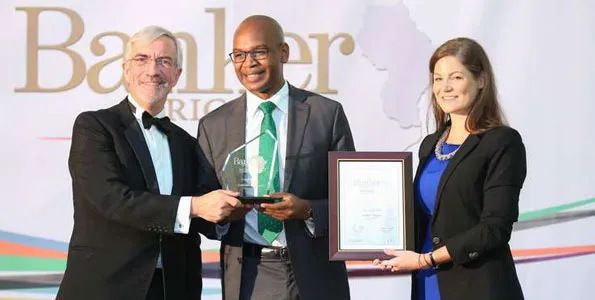
Kenya’s banks elected him chairman of the Kenya Bankers Association in June 2018 and re-elected him a year later. The Financial Times named him among Africa’s 25 leaders to watch, and President Uhuru Kenyatta made him a Chief of the Order of the Burning Spear. He left KCB in May 2022, about six months before his contract ended, and handed over to Paul Russo. The bank’s chairman, Andrew Kairu, credited him with deepening financial inclusion across East Africa.
The declaration.
In December 2015, a day after Safaricom’s Bob Collymore declared his wealth, Oigara did the same. He gave his net worth as Sh220 million and his monthly pay as Sh4.9 million, arguing at the time that secrecy fueled corruption and that the private sector should lead on transparency.
Eight years later he called it a mistake. Business leaders had agreed to declare together, but only he and Collymore went through with it, and the figures followed them afterwards. “Declaring my wealth as a young CEO was a foolish thing to do,” he told Business Daily in 2023.
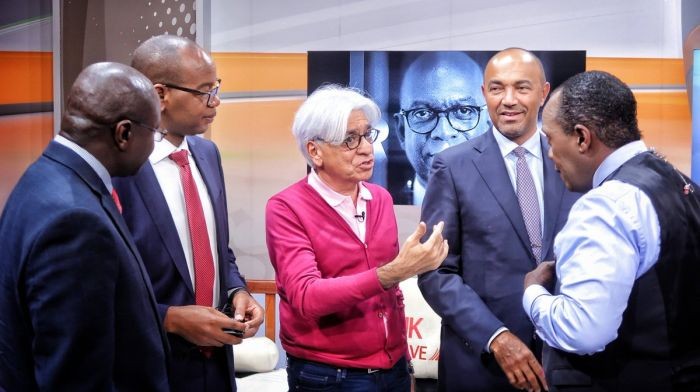
He still credits Collymore as an inspiration. Oigara was part of the circle Kenyan media called Collymore’s “boys’ club”. In June 2020, a year after Collymore’s death, he joined Jeff Koinange, Patrick Quarcoo, Peter Kenneth and Bharat Thakrar at the home of Collymore’s widow, Wambui Kamiru Collymore, to remember him.
Stanbic.
Stanbic Bank Kenya made him chief executive, with responsibility for South Sudan, from December 2022. Three months later Kibabii University gave him an honorary Doctor of Humane Letters.
Stanbic Holdings | 2023 | 2024 | 2025 |
|---|---|---|---|
Profit after tax (Sh billion) | 12.2 | 13.7 | 13.7 |
Dividend per share (Sh) | 15.35 | 20.74 | 22.35 |
Profit rose 34% in his first full year and 12.8% in the second, then held flat in 2025. The dividend has risen four years in a row.
In August 2025 Standard Bank named him regional chief executive for East Africa. On 1 March 2026 he succeeded Patrick Mweheire as chief executive of Stanbic Holdings, the listed parent company. In the first half of 2026, loans grew 24% to Sh290 billion and deposits 28% to Sh422 billion, with a non-performing loan ratio of 7.73%. Profit barely moved.
Twenty-one kilometres.
Oigara runs. He once had the Boston Marathon in his sights before settling on the half-marathon distance.
When he took over at KCB in 2012, the Daily Nation found him driving his three children to school each morning, reading bedtime stories, and playing tennis and swimming with them at weekends. A decade of chief executive jobs eroded that. By 2023 he told Business Daily that the school runs had lapsed. On another leader’s advice, he now keeps two or three weeknight dinners with his children, at 7pm. His reading list in 2012 included Why Nations Fail and Great by Choice. Kenya’s sports minister also once named him to the World Rally Championship steering committee.
Giving back.
In the 2023 interview he described this stage of his career as a season for giving back. His stated aim is to mentor young leaders who will run Stanbic after him. His views on leadership are short and plain. He said he keeps people around him who challenge him, and that ambition should keep a leader worried and awake. On failure his advice was to fail early and cheaply. “Leadership is a privilege to serve, not a right,” he said.
The deadline.
In December 2023 he described Stanbic Bank Kenya as a top seven bank and said his ambition was to break into the top three. He also gave a date for judging him: “You can measure us by 2027 or 2028.”
The Precursor Editorial Team
Precursor is published by the FinTech Association of Kenya and exercises independent editorial judgement under the Editorial Independence Charter. This article is labelled Inside The Rails: no commercial party reviewed it before publication.
From Eastlands tinkerer to Microsoft’s Nairobi engineering chief.
She grew up in Nairobi’s Eastlands, the eldest of five children, tinkering with the household gadgets. Catherine Muraga rose through a brewery, an airline and two banks to lead Microsoft’s engineering centre in Nairobi. On Monday, its staff were told their jobs were going.
CEO Spotlight · 6 min read
Nancy Njau, the insider who took Family Bank public.
Family Bank has more than doubled annual profit and capital since Nancy Njau took charge, raised KSh8 billion from private investors and listed on the Nairobi Securities Exchange in June 2026. The next test is harder. Its 2025 to 2029 strategy targets tier-one status as the lender expands its balance sheet, grows digital banking and private-sector credit, while investors watch costs, asset quality and how effectively the new capital is deployed
CEO Spotlight · 9 min read
Benjamin Njenga wants a million farmers on Apollo’s books.
His mother fed and schooled seven children from one acre. Benjamin Njenga passed up law for agribusiness, learnt technology at Safaricom and co-founded Apollo Agriculture, which sells seed, fertiliser and credit to smallholders in Kenya and Zambia. He has told FINTAK the number he is chasing next.
CEO Spotlight · 6 min read