Benjamin Njenga wants a million farmers on Apollo’s books.
His mother fed and schooled seven children from one acre. Benjamin Njenga passed up law for agribusiness, learnt technology at Safaricom and co-founded Apollo Agriculture, which sells seed, fertiliser and credit to smallholders in Kenya and Zambia. He has told FINTAK the number he is chasing next.

Benjamin Njenga
Benjamin Njenga had the grades to study law. He chose agribusiness, because of an acre of land. His mother farmed it, and from it she fed and educated seven children. “If my mom was not farming, I may never have gone to school,” he told FINTAK in November 2024.
Ten years after co-founding Apollo Agriculture, he is still building on that acre. Apollo lends seed, fertilizer, and insurance to smallholder farmers and lets them repay over the season. It reports serving more than 350,000 farmers in Kenya and Zambia, and it has raised more than $67 million. In May 2026 it closed what its partners called Kenya’s first private-sector local-currency securitization in smallholder agriculture, raising KES 276 million against loans to almost 24,000 farmers.
His business case is simple. “The beauty with Apollo is that the more successful the farmers we serve, the more successful we are,” he told SoftBank’s Vision Fund, one of Apollo’s investors.
One acre.
Njenga is the second of seven children. His father was a soldier who left the army, and he spent money on books rather than shopping, which caused arguments at home. He pointed out to his son the big cars that educated men drove. He called his favourite child “Baba”.
His mother saw the farm differently, and she never understood why her clever son chose to study it. Njenga heard the usual objections: agriculture was for poor people, it was not cool, and nobody got rich from it. He took the Bachelor of Science in Agribusiness Management at Egerton University anyway. On an internship at Sony Sugar in South Nyanza, he ate fish nearly every day. He still calls salmon his favourite food, although he does not buy it often.
Safaricom, then crop insurance.
He turned down other job offers to join Safaricom, where he worked from 2008 to 2011, the years when M-Pesa was spreading across Kenya. He told FINTAK it showed him how technology could serve rural customers, who were most of Kenya’s market. He finished a master’s degree at 29.
He then joined ACRE Africa, which sells crop and livestock insurance to small farmers, and rose to commercial director and deputy managing director. The hardest part, he told FINTAK, was persuading farmers that insurance was worth paying for. Many told him they would rather pray for rain and trust that their cows would not die.
Six hours late.
In 2016 he left a well-paid job to co-found Apollo Agriculture with Eli Pollak, a Stanford graduate who had moved to Kenya, and Earl St Sauver, an engineer. It was an unpopular decision at the time, Njenga said.
The first season nearly went wrong on the first day. Pollak has described arriving six hours late at Apollo’s biggest delivery point, which was set up to serve 250 farmers, just as the rain began. He and “Ben, our operations manager” went from farmer to farmer apologizing. Almost every one of them came back the next day.
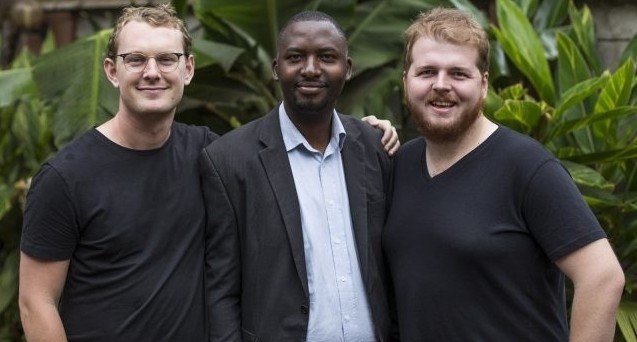 The model changed quickly after that. Phone sales failed, because farmers wanted to meet someone before they signed up, so Apollo hired thousands of part-time sales agents paid on commission. Renting its own trucks proved too costly, so it began working through village agrodealers. Today a farmer applies on a basic phone, gets an instant credit decision from Apollo’s machine-learning models, collects inputs from a local shop and pays back over the season. Its average loan was about $170.
Investors followed:
Year | Funding |
|---|---|
2020 | $6 million Series A, led by Anthemis |
2022 | $40 million Series B, led by SoftBank Vision Fund 2 |
2024 | $10 million from Swedfund and ImpactConnect |
2025 | €1 million loan from the Hivos-Triodos Fonds, for Zambia |
2026 | KES 276 million local-currency securitisation |
The shocks came along with the money. In the interview, Njenga listed what Apollo had survived since it started: fall armyworm, locusts, drought, Covid and a contested election.
Growth came anyway. He told FINTAK that Apollo went from about 80,000 paying farmers to 200,000 in 2023, with a loan book of more than KES 3.7 billion. Farmers who used to harvest seven to 10 bags of maize an acre, he said, could reach 20 with Apollo’s package. In 2023 the company moved into Zambia. By May 2025 it had about 200 field officers and more than 28,000 farmers there.
The shilling problem.
When FINTAK met Njenga in November 2024, the hardest problem was money, not weather. Apollo raised equity and impact debt in dollars and lent to farmers in shillings, so every swing in the exchange rate hit its costs. “Raising in dollars and financing in KES is not easy because of the FX challenges,” he said. Apollo, he added, was in talks with local banks.
Eighteen months later the answer came from capital markets instead. In May 2026, working with the Indian credit platform Kaleidofin, Apollo bundled KES 370 million of loans to 23,839 farmers. More than half of the borrowers were women, and about one in five was borrowing for the first time. Apollo sold the expected repayments to investors for KES 276 million upfront. The rating agency Agusto rated the deal BBB-, an investment grade, and the IDH Farmfit Fund was the anchor investor. It is the first phase of a programme that aims to raise about KES 2.37 billion for more than 130,000 farmers.
Trust before technology.
Apollo sells itself on its technology. When Njenga explains it, he starts with people.
On the BBC in April 2025, he described credit models built for farmers who have no bank records. The models combine satellite data, what Apollo knows about each farmer and credit bureau records. Monitoring crops lets Apollo move repayment dates to match the harvest. Still, he said, none of it works without the field officers who visit farmers in person. “The most important thing with farmers changing behaviour is trust.”
The farm in Mai Mahiu.
Njenga keeps gumboots in the back of his car. When FINTAK met him at a Nairobi restaurant, he pointed that out before anything else. He runs his own farm in Mai Mahiu, with dairy cows, goats and crops, because he wants to practise what Apollo teaches. Going to see his animals is how he rests.
Building Apollo has cost him time. He told FINTAK that for seven years he had time for little else, and that friends and family often came second. He had planned a PhD before 35. At 40 he has not started it, and says he does not regret it. What he is proudest of, after a long pause, is that his children grew up while he built the company. His daughter wants to be a doctor and has no time for the farm. His son loves it and may take it over.
He also makes time to reward himself, with a family dinner out or a trip, such as Dubai in 2023. At home in the village he eats ugali and managu.
The next number.
Njenga’s next target is concrete. He told FINTAK he wants half a million farmers in Kenya, then a million. The solutions are known, he said. The problem is getting them to farmers.
This year the stakes became plain again. Drought hit the maize belt in Uasin Gishu and Trans Nzoia. The government allowed private traders to import up to 25 million bags, and the cereals board raised its buying price to KES 4,000 a bag. “Presidents fear managing a hungry nation,” Njenga told FINTAK.
Asked which farm product he would be, he picked the one a lender values. “I would be a dairy cow, a Friesian, because it is an asset that you can collateralise for a loan.”
The Precursor Editorial Team
Precursor is published by the FinTech Association of Kenya and exercises independent editorial judgement under the Editorial Independence Charter. This article is labelled Inside The Rails: no commercial party reviewed it before publication.
Caine Wanjau: Making Peace with the Taxman.
Kenya’s expansion of eTIMS turned electronic invoicing from a compliance requirement into a software opportunity for DigiTax, which says it now serves more than 450 clients and processes millions of transactions. Co-founder and chief executive Caine Wanjau is taking the model beyond Kenya, starting with Zambia, as more African governments seek digital systems that widen tax visibility while businesses look for simpler ways to comply.
CEO Spotlight · 14 min read